VECTORYN AI
EU PROJECT CONCEPT NOTE
Governed Autonomous AI Agents for European Industry
| Project vision Vectoryn AI is an enterprise-grade platform for governed autonomous AI agents in industrial environments. It connects enterprise and operational knowledge, AI models, tools and business systems so that agents can move safely from information retrieval to controlled action while preserving human oversight, auditability and policy enforcement. |
PROJECT SNAPSHOT
| Domain | Industrial AI agents / manufacturing digital transformation |
| Current maturity | Prototype / MVP development; approximately TRL 4-5 pending formal pilot validation |
| Target maturity | Validated industrial platform at TRL 6 through real-world pilots |
| Primary funding routes | Horizon Europe, EIC, Digital Europe, EuroHPC / AI Factories |
| Partner need | Industrial pilot partners, research organisations, AI infrastructure and integration partners |
Agents · Knowledge · Impact
Prepared for EU funding, consortium development and partner discussions | October 2026
1. Industrial Challenge
European manufacturing companies operate with fragmented information and application environments. Critical knowledge is distributed across ERP, MES, CMMS/EAM, technical documentation, quality systems, IoT platforms, databases, spreadsheets and collaboration tools. Employees often need to manually search, correlate and interpret information before they can make an operational decision.
General-purpose AI assistants solve only part of this problem. Industrial adoption requires trusted enterprise context, robust integration, strong identity and access controls, traceability, cybersecurity, human oversight and clear governance for any action performed by an AI agent.
| Core problem statement The real industrial question is not simply “How can we introduce generative AI?” but “How can we safely allow AI agents to participate in real industrial processes and enterprise workflows?” |
2. Proposed Solution
Vectoryn AI provides a modular platform for deploying specialised enterprise and industrial AI agents. The platform is designed as a governed orchestration layer between users, AI models, enterprise knowledge and operational systems.
Enterprise Knowledge Layer - controlled access to technical documentation, maintenance history, procedures, structured data and operational context.
AI Agent Layer - specialised agents for maintenance, knowledge retrieval, production support, quality, reporting and controlled workflows.
Integration & Tool Layer - MCP-based and API-based access to enterprise tools and systems such as ERP, MES, CMMS, databases and industrial data services.
Governance & Control Layer - identity, permissions, policy enforcement, human approval, logging, auditability and traceability of actions.
Flexible Model Layer - routing across cloud and local models to avoid dependency on a single model provider and support hybrid / on-prem deployment patterns.
3. Innovation and Differentiation
Vectoryn AI is not positioned as another general-purpose chatbot. Its differentiation is the combination of industrial specialisation, enterprise interoperability, governed autonomy and European trust requirements in one platform.
Industrial AI agents - specialised for manufacturing workflows, assets, procedures and enterprise operations.
Governed autonomy - agents progress from read and analyse to recommend, request approval and execute according to risk and policy.
Interoperable European architecture - heterogeneous IT/OT integration, human oversight, auditability, deployment flexibility and cloud/local model routing.
4. MVP Architecture and Current Development Direction
The MVP is designed to prove business value on one focused industrial use case while validating the core architectural principles required for later enterprise-scale deployment. It combines the current agent runtime, Vectoryn Core, an MCP bridge, enterprise knowledge/RAG, maintenance capability, audit and human approval, with a decision gateway for policy-aware routing.
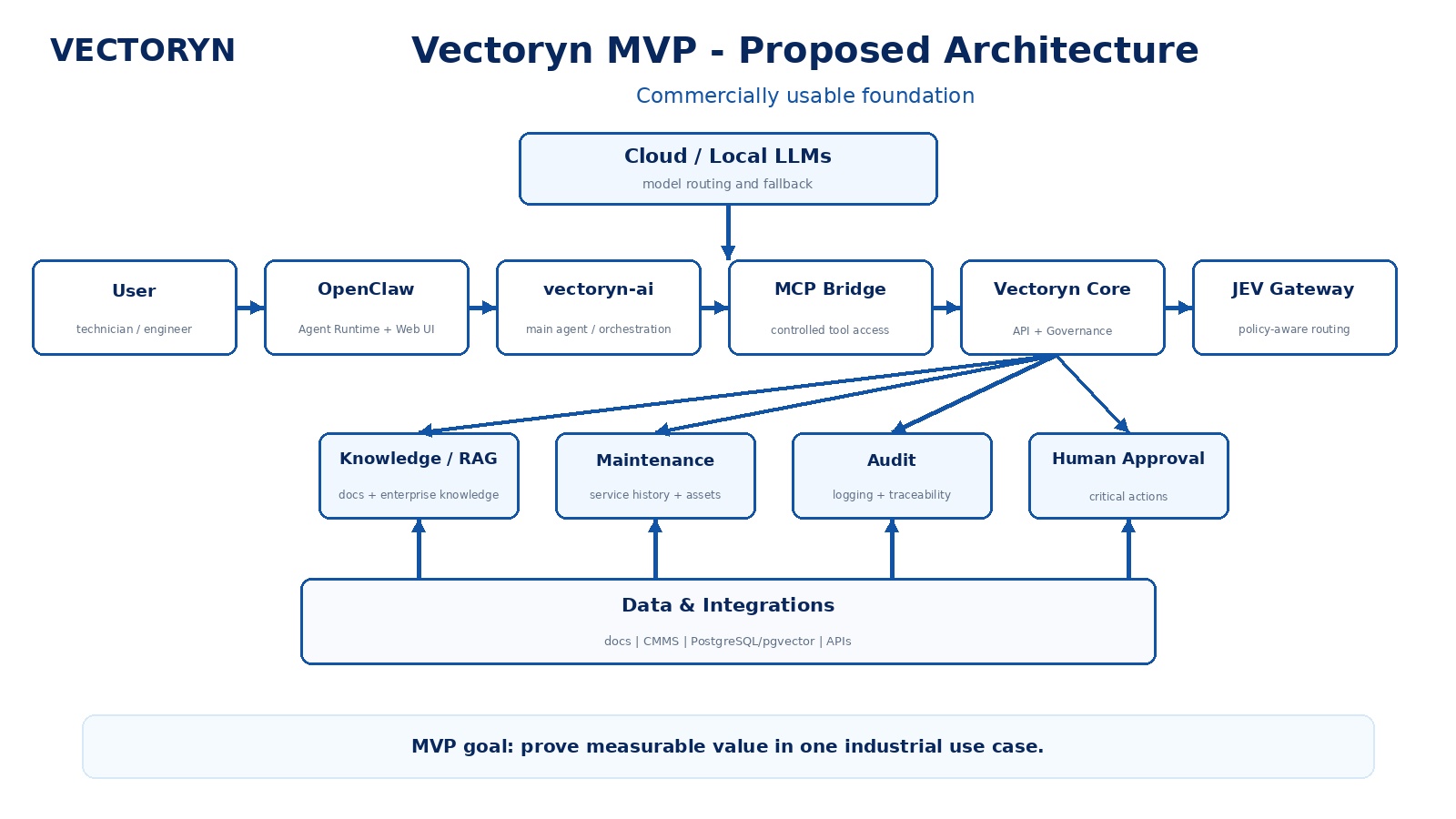
Figure 1. Vectoryn MVP - proposed architecture (commercially usable foundation).
MVP validation focus
Demonstrate measurable value in one industrial use case, preferably maintenance and industrial knowledge support.
Validate agent-to-tool integration, controlled retrieval and policy-aware decision routing.
Verify auditability and human approval in critical actions.
Establish a repeatable deployment pattern that can be transferred to a pilot customer environment.
5. Target Full-Production Architecture
The target architecture extends the MVP into a multi-agent enterprise platform for a manufacturing company. It separates access and governance, core orchestration, specialised agents, runtime/model routing, enterprise systems and data services. This separation is central to scalability, security, compliance and vendor independence.
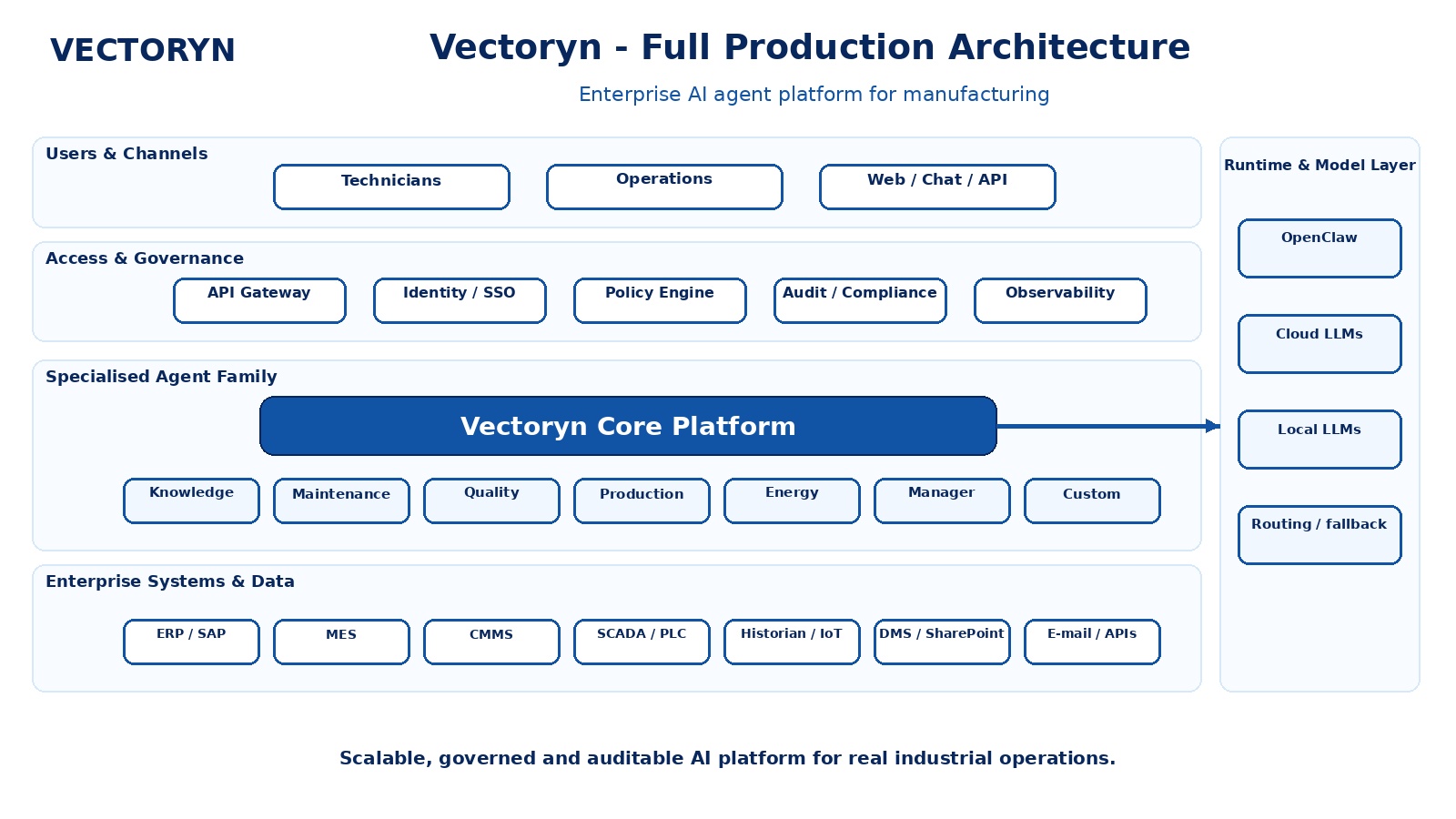
Figure 2. Vectoryn full-production architecture - enterprise AI agent platform for manufacturing.
Production design principles
Central governance: API gateway, identity/SSO/RBAC, policy engine, audit/compliance and observability.
Vectoryn Core as the orchestration layer for agents, tools, MCP, workflows, human approval and LLM routing.
Specialised agent family for knowledge, maintenance, quality, production, energy, management and custom use cases.
Integration with ERP/SAP, MES, CMMS, SCADA/PLC, Historian/IoT, DMS/SharePoint and external APIs.
Flexible runtime and model layer with cloud and local models, including routing and fallback strategies.
6. Flagship Use Case and Industrial Pilots
Flagship use case: Industrial Maintenance & Knowledge Agent
A technician identifies a problem on an industrial asset. The Vectoryn agent retrieves the relevant technical documentation, maintenance history, previous incidents, internal procedures and available system data, then generates an evidence-backed recommendation. Depending on risk and policy, the system may request human approval before initiating a downstream maintenance workflow.
Indicative pilot design
| Pilot environment | 1-2 manufacturing sites |
| Scope | One asset family or production line; maintenance / knowledge workflow |
| Users | 10-30 technicians, engineers and managers |
| Duration | 8-12 weeks per pilot |
| Data | Technical documents, service history, asset data, selected enterprise-system data |
| Validation | Before/after business KPIs + technical + governance KPIs |
Indicative success metrics
| KPI domain | Success criterion |
| Knowledge / retrieval | Relevant evidence-backed answers; measurable retrieval precision and completeness. |
| Productivity | Target 50%+ reduction in information-search time for selected tasks. |
| Incident handling | Target 30%+ reduction in analysis time for selected maintenance incidents. |
| Governance | 100% traceability of agent actions; approval enforced for high-risk actions. |
| Integration | Stable execution of approved tool/API workflows with auditable outcomes. |
7. European Strategic Relevance
Accelerates trustworthy AI adoption in European manufacturing and engineering companies.
Supports human-centric and controlled AI deployment rather than opaque autonomous automation.
Strengthens technological sovereignty through model and infrastructure flexibility, including local and European compute options.
Embeds governance, auditability and human oversight into the technical architecture, supporting EU AI Act readiness.
Improves competitiveness by reducing information friction and enabling controlled automation of industrial knowledge work.
8. R&D Programme and Work Packages
| WP | Work package | Main scope |
| WP1 | Industrial AI Agent Platform | Core architecture, orchestration, runtime interfaces and reliability. |
| WP2 | Enterprise Knowledge & Integration | RAG, data connectors, MCP/API integration and industrial data access. |
| WP3 | Governed Autonomy & Security | Identity, policy enforcement, human approval, audit, traceability and security controls. |
| WP4 | Industrial Pilots | Deployment and validation in real manufacturing environments. |
| WP5 | Validation & Commercialisation | Technical evaluation, user acceptance, economics, replication and go-to-market preparation. |
9. Consortium Profile
Vectoryn AI seeks a focused European consortium combining technology development with real industrial validation. The preferred structure is intentionally pragmatic and pilot-driven.
Industrial pilot partners: manufacturing and engineering companies in machinery, railway, automotive, industrial equipment or process-intensive sectors.
Research partners: AI, autonomous agents, human-AI interaction, industrial AI, cybersecurity and AI governance expertise.
Technology partners: ERP/MES/CMMS integration, industrial data platforms, IoT, cybersecurity, robotics/automation and AI infrastructure.
Ecosystem partners: AI Factories, EDIHs, national contact points and European AI / manufacturing innovation networks.
Role of Vectoryn AI
Vectoryn AI is positioned as the technology provider and platform owner for the industrial AI agent layer. Within a consortium, Vectoryn can lead technical work packages covering agent orchestration, enterprise integration, governed autonomy and industrial AI architecture. For focused pilot projects, Vectoryn may also take a stronger technical coordination role.
10. Commercialisation and Funding Objective
EU funding would accelerate the transition from MVP and pilot validation toward a scalable European industrial platform. Investment would primarily support platform R&D, industrial integrations, AI-agent reliability, governance, cybersecurity, infrastructure, pilot deployments, validation and commercialisation preparation.
Primary commercial model: enterprise subscription / licence with deployment and integration services.
Premium deployment options: private cloud, hybrid and selected on-premises installations.
Target customers: European manufacturing and engineering companies with complex enterprise data and operational workflows.
Indicative funding pathways: Horizon Europe, EIC, Digital Europe and EuroHPC / AI Factories.
11. Funding Readiness and Near-Term Roadmap
Vectoryn AI has a strong technical and strategic fit for European industrial AI programmes, but the highest-value next step is to convert technical progress into formal industrial evidence. The following roadmap is intended to strengthen readiness for larger EU funding instruments.
| Timing | Priority | Deliverable |
| Now | Stabilise MVP | Repeatable deployment, focused maintenance/knowledge use case, test dataset and governance controls. |
| 0-3 months | Pilot preparation | Secure industrial pilot / LOI, define baseline KPIs, complete security and IP review. |
| 3-6 months | Industrial validation | Run pilot, measure before/after impact, document technical and governance evidence. |
| 6-12 months | EU proposal scale-up | Use pilot evidence for Horizon consortium, EIC Pre-Accelerator / Accelerator readiness and commercial expansion. |
12. Collaboration Proposal
| Partner ask Vectoryn AI is looking for industrial pilot companies, research institutions, AI infrastructure partners and organisations preparing European AI / advanced-manufacturing consortia. The immediate goal is to identify a high-value pilot use case and the most suitable EU funding route. |
Proposed next step
30-45 minute technical and funding-fit discussion.
Identify the industrial use case, partner roles and target programme.
Agree the pilot scope, target TRL, expected impact and preliminary work-package structure.
Prepare a tailored 1-page partner teaser and call-specific proposal concept.
Contact
Vectoryn AI | European industrial AI agents | www.vectorynai.com
Governed Autonomous AI Agents for European Industry
Industrial AI · AI Agents · Enterprise Integration · AI Governance · European Sovereignty